Free
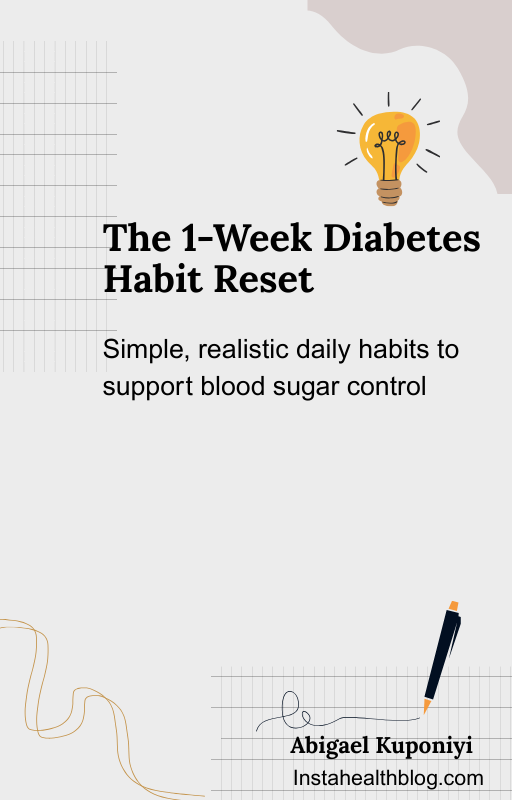
1-Week Diabetes
Habit Reset
Build simple, science-backed routines that support better blood sugar stability — without overwhelm.
Inside this free guide, you’ll get:
✓ A simple weekly movement structure (aligned with international physical activity recommendations)
✓ Daily habit prompts designed to reduce glucose variability
✓ A realistic focus on sleep, stress, and consistency
✓ A printable tracker to reinforce behaviour change
✓ A science-informed framework — not trends or fads

Free
Simple, Affordable Ways to Manage Obesity with Limited Resources.
This free, evidence-based guide was developed to support individuals and communities facing both obesity and financial hardship.
It provides practical, low-cost strategies for healthier living, including:
- Budget-friendly meal plans (global and African options)
- Affordable, nutritious food swaps
- Free or low-cost ways to be physically active
-Stress and sleep management tips
-Simple habit tracking tools
The guide emphasizes progress over perfection and highlights that health does not belong only to the rich.
Free
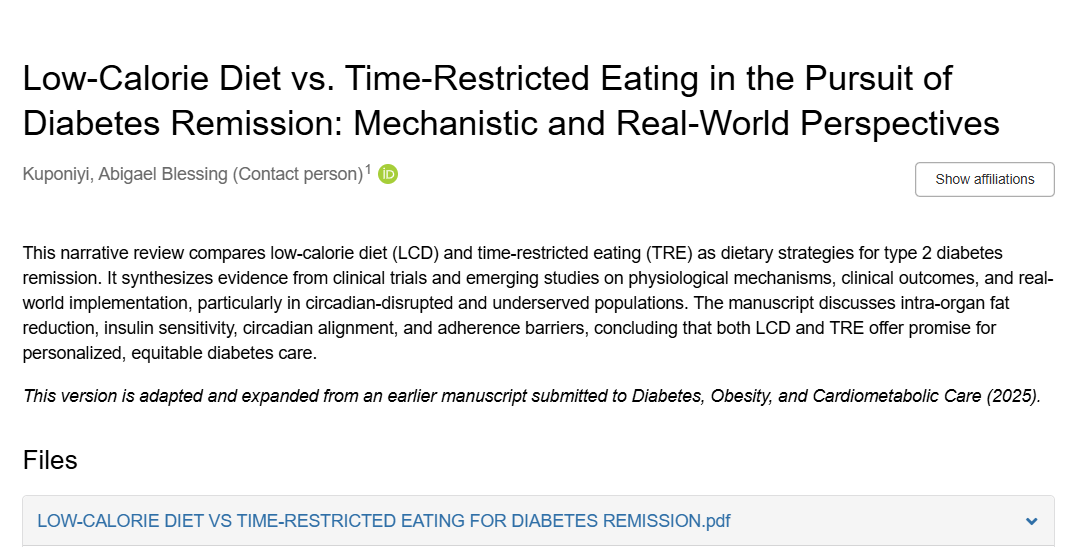
Low-Calorie Diet vs. Time-Restricted Eating in the Pursuit of Diabetes Remission
This narrative review compares low-calorie diet (LCD) and time-restricted eating (TRE) as dietary strategies for type 2 diabetes remission. It synthesizes evidence from clinical trials and emerging studies on physiological mechanisms, clinical outcomes, and real-world implementation, particularly in circadian-disrupted and underserved populations.
The manuscript discusses intra-organ fat reduction, insulin sensitivity, circadian alignment, and adherence barriers, concluding that both LCD and TRE offer promise for personalized, equitable diabetes care.
Free
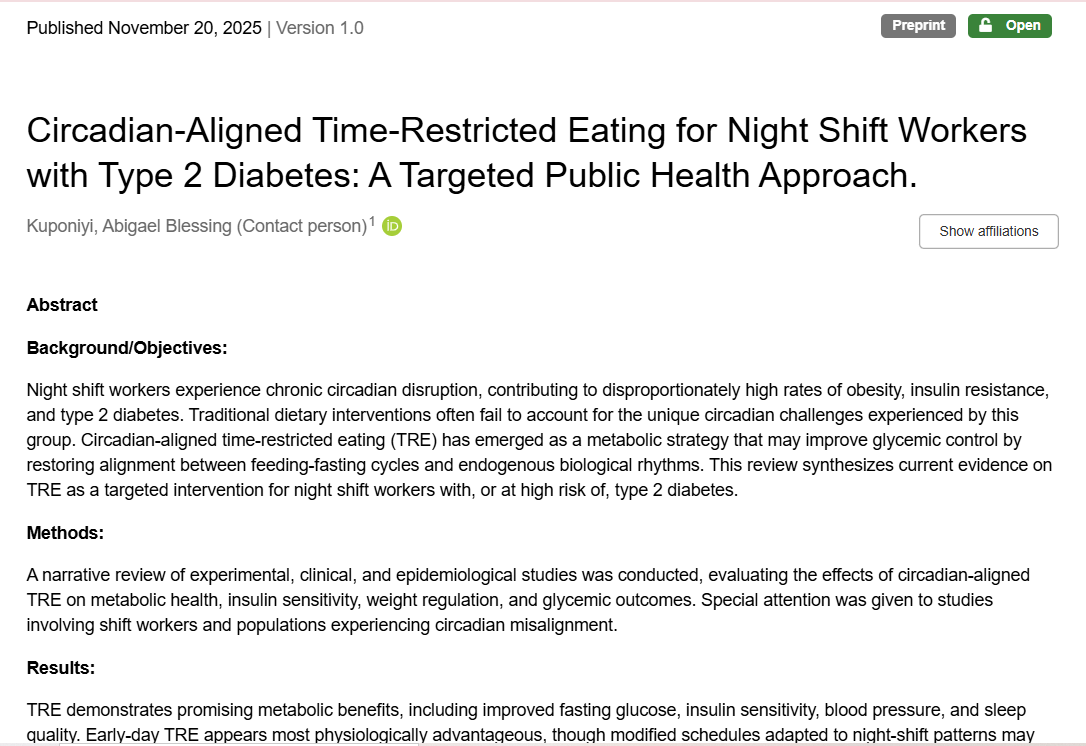
Time-Restricted Eating for Night Shift Workers with Type 2 Diabetes
Night shift workers experience chronic circadian disruption, contributing to disproportionately high rates of obesity, insulin resistance, and type 2 diabetes. Traditional dietary interventions often fail to account for the unique circadian challenges experienced by this group.
Circadian-aligned time-restricted eating (TRE) has emerged as a metabolic strategy that may improve glycemic control by restoring alignment between feeding-fasting cycles and endogenous biological rhythms. This review synthesizes current evidence on TRE as a targeted intervention for night shift workers with, or at high risk of, type 2 diabetes.