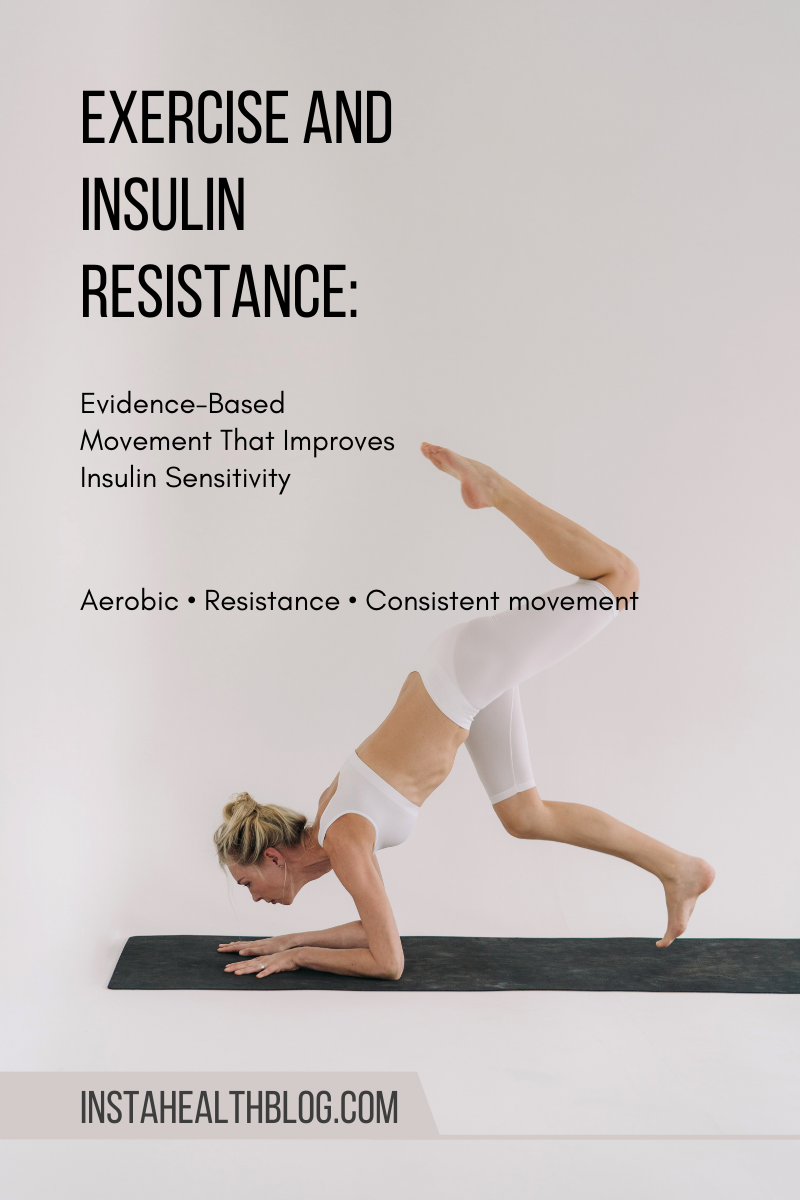
Exercise and Insulin Resistance: Evidence-Based Movement That Improves Insulin Sensitivity
Exercise doesn’t just burn calories. It changes how your body responds to insulin.
Insulin resistance is one of the earliest metabolic changes on the path toward type 2 diabetes — often developing years before diagnosis. The encouraging part? Evidence consistently shows that physical activity can improve insulin sensitivity, even without dramatic weight loss.
A recent systematic review and network meta-analysis published in JAMA Pediatrics examined dozens of randomized trials in young people with excess weight. While the population was paediatric, the physiological mechanisms are well-established and the principles apply broadly to adults, particularly for early prevention.
What this body of evidence shows is not that more exercise is always better — but that the right combination matters.
What the Evidence Shows
Across trials, several consistent findings emerged:
1. Exercise improves insulin resistance markers
Regular physical activity was associated with improvements in fasting insulin and insulin resistance indices, even when weight loss was modest or absent.
This reinforces an important point:
insulin resistance is not only about body weight — it’s about how muscles and tissues handle glucose.
2. Combined exercise works better than single-mode exercise
Interventions that combined:
- Aerobic activity (e.g. walking, cycling),
- Resistance training, and
- Short bouts of higher-intensity effort
produced greater improvements in insulin sensitivity than aerobic or resistance exercise alone.
This aligns with what we understand physiologically:
- Aerobic exercise improves glucose uptake
- Resistance training increases muscle mass (a major glucose sink)
- Intervals improve insulin signalling efficiency
Together, they create a stronger metabolic effect.
3. Benefits were seen with realistic, moderate volumes
Many effective interventions clustered around:
- 2–3 structured sessions per week
- Sessions lasting ~45–60 minutes
- Total weekly activity often below extreme training thresholds
This fits well with WHO physical activity guidelines, which recommend:
- 150–300 minutes of moderate-intensity activity per week, and
- Muscle-strengthening activities on 2 or more days per week
Importantly, the trials suggest that quality and structure matter as much as total minutes.
What This Means in Practice
This evidence does not suggest:
- Punishing workouts
- Daily high-intensity training
- Gym-only routines
It suggests something far more achievable:
Mix your movement, repeat it weekly, and stay consistent.
A Simple Evidence-Based Weekly Plan (Putting This Into Practice)
Here’s a practical example inspired by the research, adaptable for beginners and realistic for busy schedules.
Monday
- 10-minute brisk walk (morning or evening)
- 20 minutes of simple resistance: bodyweight squats, wall or floor push-ups, core work (e.g. planks or dead bugs)
Wednesday
- 30 minutes of brisk walking or cycling
(You should be slightly breathless but able to talk)
Friday
- 20-minute interval-style walk:
- 1 minute faster pace
- 2 minutes easy pace (repeat)
Resistance bands, light weights, or bodyweight
Weekly Total
- ~90 –120 minutes of mixed activity
- Includes aerobic movement, strength, and brief higher-effort bursts
This falls within evidence-supported ranges linked to improved insulin response, without requiring extreme time commitments.
Why This Matters (Beyond Weight Loss)
Insulin resistance can improve before medication is needed and before diabetes develops.
Movement helps by:
- Increasing glucose uptake into muscles
- Improving insulin signalling
- Reducing post-meal glucose spikes
- Supporting metabolic flexibility
These changes matter even if the scale doesn’t move dramatically.
The goal is not perfection — it’s timely, consistent action.
Key Takeaway
Exercise is not just a calorie-burning tool.
It is a metabolic intervention.
Evidence supports:
- Mixing aerobic + resistance movement
- Adding short higher-effort bursts when safe
- Staying consistent with realistic weekly volumes
Start small. Build gradually. Let the body adapt.
References:
García-Hermoso, A., López-Gil, J. F., Izquierdo, M., Ramírez-Vélez, R., & Ezzatvar, Y. (2023). Exercise and Insulin Resistance Markers in Children and Adolescents With Excess Weight: A Systematic Review and Network Meta-Analysis. JAMA pediatrics, 177(12), 1276–1284. https://doi.org/10.1001/jamapediatrics.2023.4038
Duncan, G. E., Perri, M. G., Theriaque, D. W., Hutson, A. D., Eckel, R. H., & Stacpoole, P. W. (2003). Exercise training, without weight loss, increases insulin sensitivity and postheparin plasma lipase activity in previously sedentary adults. Diabetes care, 26(3), 557–562. https://doi.org/10.2337/diacare.26.3.557
Related reading:
How to Fit Your Doctor’s Diabetes Guidelines Into Real Life (Without Burning Out).